
Energy, decarbonization and competitiveness in the paper industry
Wednesday 7 October time 14:00 - 16:50MIAC Conference Room
Energy, decarbonization and competitiveness in the paper industry
Wednesday 7 October time 14:00 - 16:50MIAC Conference Room
Energy has become one of the key drivers of competitiveness in the paper industry. Increasing regulatory pressure, evolving emissions trading mechanisms, energy market volatility, and ambitious decarbonization targets are forcing paper mills to rethink their energy strategies and industrial investments.
This conference will provide an up-to-date overview of the main challenges and opportunities facing the industry, covering the operation of the Emissions Trading Scheme (ETS), CO₂ reduction strategies, the benefits of high-efficiency cogeneration, and the latest technologies for improving energy efficiency across paper production processes.
Through industrial case studies, technical presentations, and real-world experiences, attendees will explore innovative solutions for dryer section optimization, energy recovery, thermal utility management, and the integration of complementary technologies such as biomass, high-temperature heat pumps, and Power-to-Heat systems.
The session is designed for mill managers, energy managers, technical directors, production managers, process engineers, and all professionals involved in strategic decisions related to energy efficiency, sustainability, and long-term competitiveness in the paper industry.
Registration of participants
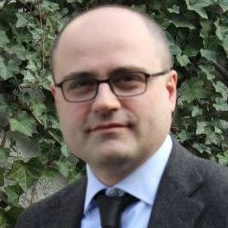
Alessandro Bertoglio
Opening remarks
The conference will be moderated by Alessandro Bertoglio of Assocarta, who is responsible for the Association’s activities related to energy, climate and transport, with a particular focus on energy efficiency and decarbonization issues affecting the paper industry.

Massimo Beccarello
The Emissions Trading Scheme: operation and challenges

Mauro Mallone
The revision of the Emissions Trading Scheme Directive
At the European level, discussions are currently underway on the revision of the ETS (Emissions Trading System), with potential changes affecting both the 2026-2030 period and the post-2030 framework. Key topics under consideration include the revision of benchmarks, the functioning of the Market Stability Reserve (MSR), and carbon border adjustment mechanisms.
In this context, the Italian Ministry of Environment and Energy Security is actively involved in defining Italy’s position and proposing possible adjustments to the system, with the aim of achieving European climate targets while safeguarding the competitiveness of national industry.
SPEAKER BIO
Mauro Mallone is an Electrical Engineer who graduated with honors from Sapienza University of Rome. He has more than forty years of experience in the fields of energy, technological innovation, and industrial policy, gained through research, development, and management positions at ENEA, AGITEC, IPI, and the Italian Ministry of Economic Development. Throughout his career, he has coordinated national and European programmes focused on innovation, energy efficiency, renewable energy, and technology transfer, while participating in numerous institutional working groups and committees at both national and international level. He currently holds a senior management position at the Italian Ministry of Environment and Energy Security, where he works on sustainable energy development, energy efficiency, and distributed energy systems, contributing to the definition of national energy strategies and policies.
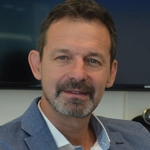
Gian Luca Fornesi
High-impact shoe press upgrades: driving energy efficiency and cost reduction
In today’s paper industry, accurately evaluating projects aimed at improving energy efficiency and reducing environmental impact has become increasingly important, particularly for small- and medium-sized production sites.
By increasing the dry content before the drying section, high-load shoe presses significantly reduce thermal energy demand, enabling mills to lower steam consumption and achieve substantial reductions in CO₂ emissions.
Through the presentation of two recent press section rebuild projects on paper and board machines, this session will cover different machine configurations and paper grades, demonstrating the versatility and reliability of Voith-Toscotec high-load shoe press retrofit solutions.
Each case study highlights how advanced press technology can significantly improve sheet dryness after pressing, delivering measurable gains in overall energy efficiency and machine performance.
The presentation will illustrate Toscotec’s technical approach, implementation strategies, and the operational results achieved by customers following start-up, with a focus on the key factors driving energy savings and carbon footprint reduction.
Participants will gain practical insights into how targeted press section upgrades can deliver significant sustainability benefits while simultaneously improving machine runnability and production economics.
SPEAKER BIO
Gian Luca Fornesi is Head of Sales Application for the Paper & Board Division at Toscotec. With more than 30 years of experience in the paper industry, he began his career in technical design and on-site commissioning as a Start-up Engineer. His extensive professional background includes product development and application management, as well as a decade of responsibility for the Asia-Pacific markets. Since joining Toscotec in 2016, he has leveraged his technical and commercial expertise to lead the division’s application strategy, ensuring the delivery of high-performance solutions to customers worldwide.

Paul Richards
ATAD (Advanced TAD) – the sustainable TAD
Sustainability is at the forefront of innovation in the tissue industry, as energy consumption and environmental impact have become critical concerns for both producers and machine suppliers. Today, addressing climate change and advancing sustainability are not only environmental imperatives but also key drivers for achieving significant cost savings, making them essential factors in ROI calculations and top priorities for customers.
A major contributor to TAD energy demand is the large volume of water that must be evaporated during production. Reducing this water load is therefore a central objective: every percentage point increase in sheet solids entering the TAD drying process translates into substantial energy and cost savings. For example, even a 1% increase at a solids content of 25% results in a significant reduction in the amount of water that must be evaporated.
ANDRITZ has developed and patented a new pre-dewatering module, originating from its pilot facility in Graz (TIAC), which increases sheet solids before the first TAD drying stage without compromising the final paper properties. This breakthrough makes TAD technology more sustainable and energy-efficient in established markets while also creating new opportunities worldwide.
Most importantly, this technology has already been successfully implemented, supported by robust operational data and excellent results. These outcomes have been repeatedly validated at the PrimeLine TIAC (Tissue Innovation and Application Center) pilot facility. The concept has been designed with flexibility in mind, allowing existing TAD machines to be upgraded with this solution. As a result, it represents an attractive option for both new installations and brownfield projects seeking to improve sustainability, efficiency, and profitability.
SPEAKER BIO
Paul Richards began his career in the UK paper industry before moving into the fields of applied chemistry and engineering, specializing in tissue and premium product technologies. He joined ANDRITZ in 2000 and has made a significant contribution to the development of the company’s tissue technology portfolio. He played a key role in the development of ANDRITZ’s first TAD machine and has since contributed to the advancement of energy-efficient solutions and premium tissue manufacturing processes. Today, he is globally responsible for TAD product technologies at ANDRITZ, driving innovation activities and supporting customers around the world.
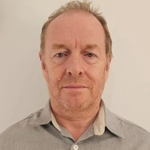
Robert Williams
Paper drying process efficiency
With the development of shoe presses, high-pressure cylinders, and high dew point hoods, the efficient use of energy in the paper machine drying section has become increasingly complex. Traditional approaches to energy utilization are no longer sufficient; it is now essential to design the steam system in conjunction with the hood and other heat sinks within the papermaking process.
This study focuses on improving thermal efficiency, reducing steam losses, and enhancing condensate recovery through a combination of system analysis, process modeling, and practical design considerations. Key areas examined include steam pressure control, condensate removal philosophy, and the most effective use of the sensible heat contained in dryer condensate.
The presentation explains the limitations of conventional system design practices and identifies the changes required to meet the performance and efficiency demands of modern paper machines.
SPEAKER BIO
Rob Williams is a plant engineering professional with a degree in Plant Engineering from Nottingham Trent University and an MSc in Applied Energy from Cranfield University. He began his career designing steam and condensate systems for paper machines, working internationally for many years. After completing his master’s degree, he moved into the commercial side of Venturi steam traps, gaining experience across a broad range of industrial sectors beyond the pulp and paper industry. He later left the United Kingdom to establish PESINT in Mexico, where he developed his own range of Venturi steam traps and supported customers throughout North and South America. Over the years, PESINT has continued to grow and now operates offices in Europe and Brazil.


Marco Pezzi, Matteo Stevanella
From cogeneration to value: efficiency, incentives and decarbonization in the tissue industry
The drying process has historically been one of the main contributors to energy costs and environmental impact in tissue production. However, the adoption of structural efficiency improvement projects has often been limited by technical complexity, significant investment requirements, and difficulties in accessing incentives for high-efficiency cogeneration.
This presentation will examine a real case study developed with a leading industrial partner, in which the integration of direct exhaust gases from a Solar Turbines gas turbine into the drying hoods enabled a significant reduction in energy consumption and emissions, while maximizing the economic benefits associated with high-efficiency cogeneration certificates through a flexible contractual model and a certification process approved by the Italian Energy Services Operator (GSE).
The presentation will also highlight the flexible operational solutions developed by Solar Turbines, designed to ensure high industrial and economic performance even in environments characterized by strong energy price volatility and increasing geopolitical uncertainty.
SPEAKER BIO
Marco Pezzi is a Mechanical Engineer with more than 15 years of experience in the power generation sector and the Italian energy market. He has been working for Solar Turbines for eight years and, over the last four years, has held responsibility for commercial activities in Italy, leading business development and customer relationship management. Throughout his career, he has built an international profile through educational and professional experiences abroad and has earned both a Master in Business Administration and a Master’s degree in Nuclear Plant Design.
Matteo Stevanella is a sustainable energy professional with more than ten years of experience in the development and management of complex on-site power generation projects. Throughout his career, he has developed strong expertise in delivering value-driven projects and supporting industrial customers in achieving their energy objectives. He currently serves as Onsite Energy Production Proposal Manager at ENGIE, where he leads multidisciplinary teams and develops strategic projects for industrial clients, actively contributing to the energy transition and the deployment of innovative energy production solutions.

Daniele Arlotti
Decarbonization and resilience of thermal utilities in the paper industry: a technological comparison in the era of energy price volatility
The paper and tissue sector is among the most energy-intensive industries within Italian manufacturing, with a high and continuous demand for thermal energy. The traditional reliance on natural gas now exposes paper mills to structural price volatility, amplified by geopolitical tensions and the increasing penetration of photovoltaic generation, which causes significant fluctuations in electricity prices on an hourly basis.
In this context, the presentation provides a technical comparison of the main technologies available for the decarbonization of thermal utilities — gas-fired cogeneration, biomass, high-temperature heat pumps, and Power-to-Heat systems — analyzing their operational flexibility, economic risk profile, and potential for integration.
The objective is to outline a methodological approach for building a resilient thermal energy portfolio capable of taking advantage of periods with low or negative electricity prices while reducing exposure to natural gas market volatility, in line with industrial decarbonization targets.
The key message is that future thermal utility generation cannot rely on a single technology. Instead, it will require the integration of multiple solutions to maximize market opportunities and minimize exposure to external risks, including geopolitical uncertainties.
SPEAKER BIO
Daniele Arlotti is an Energy Engineer specialized in the development of energy-efficiency and industrial decarbonization solutions. A graduate of the Politecnico di Milano, he combines strong technical expertise with the ability to translate customer needs into practical, sustainable, and value-driven solutions. He currently serves as Expert Technical Sales & Pre-Sales Engineer at Renovit, where he supports major industrial groups throughout the entire decision-making process, from feasibility studies and techno-economic evaluations to contractual structuring. His work focuses on developing integrated solutions based on cogeneration, photovoltaic systems, heat pumps, and innovative technologies for emissions reduction. Previously, he worked as a Senior Proposal Engineer at CGT in the cogeneration sector and as a Project Engineer at Enertech Solution, contributing to energy-efficiency projects and energy audits for complex industrial operations.

Maurizio Tomei
Efficiency and quality: the new OraStream valves at Cartiere di Guarcino
The new design of the OraStream automatic vacuum valve, developed by Oradoc, introduces an advanced control system that enables precise modulation of vacuum levels through a fast-response automated actuation mechanism. This solution simplifies the control system while ensuring high reliability and consistent performance. Available in both two-way and three-way configurations, the valve is fully interchangeable with traditional models without requiring modifications to the existing plant.
In the project carried out at Cartiere di Guarcino, the medium-vacuum automatic valves on paper machine MC1 were replaced with OraStream valves installed on the DuoFlow boxes downstream of the breast roll. The previously installed valves suffered from instability, clogging, mechanical failures, and frequent maintenance requirements.
The adoption of OraStream technology improved vacuum stability, drainage during the early stages of sheet formation, and sheet uniformity, while also reducing maintenance-related downtime. The result was a measurable improvement in operational stability, production efficiency, and paper quality.
SPEAKER BIO
Maurizio Tomei graduated in Mechanical Engineering from the University of Pisa. He subsequently gained experience in the technical department of a leading manufacturer of machinery for the paper industry. He currently serves as Sales & Customer Service Manager at Oradoc Srl, a Lucca-based company specializing in the design and manufacture of doctoring systems, drainage systems, and vacuum systems for the paper industry. The combination of his strong technical background and extensive commercial experience has made him a highly regarded professional within the paper industry.
