
Innovation, automation and new technologies for tissue converting
Thursday 8 October time 14:00 - 16:30MIAC Conference Room
Innovation, automation and new technologies for tissue converting
Thursday 8 October time 14:00 - 16:30MIAC Conference Room
The tissue industry is facing increasing demands for higher productivity, product quality, flexibility, and sustainability. In this environment, converting has become a key driver of differentiation and competitiveness.
The afternoon session of the MIAC Tissue Conference will provide an overview of the latest innovations in tissue converting and packaging technologies. Through real industrial applications, technology developments, and practical case studies, the conference will explore advanced embossing solutions, optimization of folded and rolled product lines, AI integration into production processes, digital maintenance strategies, next-generation industrial log saws, and the latest developments in tissue packaging systems.
The session is designed for mill managers, converting managers, production specialists, process engineers, maintenance professionals, and all industry experts interested in the future evolution of tissue converting and packaging technologies.
Registration of participants
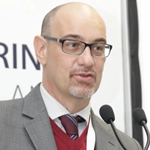
Massimo Ramunni
Opening remarks
The conference will be moderated by Massimo Ramunni, Deputy Director General of Assocarta and Secretary of Aticelca, who has been actively involved for many years in the leading technical and regulatory activities of the Italian and European paper industry.
MODERATOR BIO
Massimo Ramunni graduated in Industrial Chemistry from the University of Milan. After an initial professional experience in the aluminum industry, he joined Assocarta, the Italian association of the pulp and paper industry, in 1998 and became Deputy Director General in 2008. He is also Secretary General of Aticelca, the Italian association of paper industry technicians, and a member of the Board of EUCEPA, the European association of paper engineers and technicians. In addition, he serves on the Scientific and Technical Committee of the Master’s Degree in Paper and Cardboard Engineering at the University of Pisa. He participates in and chairs several industry working groups and committees at both national and European levels, focusing on environment, climate, circular economy, food contact materials, forestry, research and development, and technical standardization. He is the author of numerous publications and technical guidelines for the paper industry.
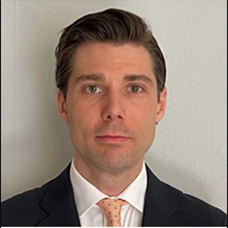
Hampus Mörner
Future-proofing the tissue industry: market review and outlook
The tissue market is gradually moving beyond the volatility that characterized the post-pandemic period and entering a new phase increasingly focused on cost control, operational efficiency, and value creation.
This presentation will examine the key dynamics shaping the industry, including cost pressures, evolving consumer preferences, regional demand shifts, and the growing impact of a more interconnected global import and export landscape.
The session will also explore the strategies adopted by industry players to address these challenges, including efficiency improvements, capacity management, and product innovation designed to meet changing market expectations.
In an increasingly competitive environment, companies are required to adopt focused strategies, directing investments and resources toward the market segments and geographical areas where they can achieve the strongest competitive advantage and create sustainable long-term value.
The presentation will conclude with a forward-looking overview of the tissue industry, highlighting key growth opportunities and the risks that will shape the sector’s development in a market increasingly driven by competitiveness and sustainability.
SPEAKER BIO
Hampus Mörner is a Manager at AFRY Management Consulting, where he focuses on market analysis, strategy, and business development within the pulp, paper, and tissue industries. Throughout his career, he has developed extensive expertise in international market analysis, competitive dynamics, and long-term industry development. He is the author and co-author of numerous studies and publications covering the tissue industry and global paper markets, with a particular focus on competitiveness, sustainability, industrial investments, and evolving demand patterns across key international markets. At AFRY, he advises producers, investors, and industry stakeholders through strategic consulting assignments, market intelligence, and growth opportunity assessments across the paper and tissue value chain.

Alessandro Borelli
Driving business value with digital services for smart maintenance
Digital transformation is profoundly reshaping industrial maintenance services, shifting the focus from reactive approaches to predictive, data-driven, and value-oriented models. In this context, digital services applied to smart maintenance represent a key enabler for improving asset reliability, operational performance, and process sustainability.
This presentation explores how the integration of field data, advanced sensing technologies, digital platforms, and analytics makes it possible to monitor plant conditions in real time, anticipate failures, and optimize maintenance activities throughout the entire machine lifecycle. Through real-world case studies and best practices, the session will demonstrate how digital services support faster and more informed decision-making, reducing unplanned downtime, operating costs, and safety risks.
Particular attention will be given to the role of smart maintenance as an enabler of new service models based on collaboration, transparency, and shared value creation. The presentation will provide a practical perspective on how to transform technology into measurable business value by leveraging data, expertise, and processes within an increasingly connected digital ecosystem.
SPEAKER BIO
Alessandro Borelli is Director, Global Service for Tissue Converting at Valmet. He brings more than 27 years of experience in the tissue converting industry. He began his career at Fabio Perini S.p.A., where he started in the Technical Office and progressively advanced into global leadership roles. Over the years, he has developed extensive expertise in global service and lifecycle management, installed-base value creation, and customer-centric service models, with a particular focus on technology-enabled solutions and data-driven decision-making. Alessandro has built a strong strategic mindset and a leadership approach centered on people development, combining operational pragmatism with a long-term business vision. Since 2018, he has held full responsibility for the global Service business in Tissue Converting, leading an international organization and driving the evolution of service from reactive support to a lifecycle partnership model. In his current role, he defines and executes the service strategy in alignment with Valmet’s business objectives, supporting customers in improving performance, reliability, and operational efficiency across the installed base.

Alberto Colombo
Production efficiency and AI integration in folding lines
In tissue converting, the efficiency of folding lines is increasingly driven by the integration of digital technologies. At OMET, the availability of machine performance data and the continuous evolution of onboard sensor systems create new opportunities to further optimize performance and support operators in the day-to-day management of production processes.
In this context, AI can contribute both to anticipating maintenance needs and to supporting setup activities by suggesting possible actions based on process anomalies, also leveraging system knowledge and integrated process expertise.
From the analysis of production parameters to support for machine adjustments, new tools are emerging that can assist operators in operational decision-making, facilitating the interpretation of complex situations and machine variability.
This approach is part of the evolution of OMET lines toward increasingly data-driven and integrated operations, where AI, sensing technologies, and process know-how contribute to making production even more stable, efficient, and predictable.
SPEAKER BIO
Alberto Colombo, born and based in Italy, has always had a strong passion for technology. He completed a technical education with a specialization in Mechanical Engineering. After teaching mechanical engineering and technology at a technical institute in Lecco, he began his professional career as a Product Manager, spending eight years developing and implementing sheet metal processing systems for coil-cutting applications involving both ferrous and non-ferrous materials. During this period, he gained extensive experience from both technical and commercial perspectives. Since joining OMET in 2009, he has been involved in the development of converting and flexographic printing lines, including both water-based and UV technologies, while also supporting the launch of new products at major international trade fairs. From 2014 onwards, he focused on the development and application of water-based digital printing technology for tissue products, contributing to the introduction of the Ink Jet Chameleon by OMET printing system. In recent years, his role has evolved from a combination of technical and commercial responsibilities to his current position as Key Account and Project Manager. In this role, he manages strategic customers and major international projects, coordinating technical and project activities while ensuring alignment between customer requirements and OMET’s technological solutions, with a particular focus on integrated systems and complete end-to-end production lines, from the tissue reel to the finished and palletized product.

Veljko Zlatanović
IMPERA: powering the next generation of tissue wrapping
In modern tissue packaging lines, the primary wrapper plays a decisive role in determining efficiency, flexibility, and productivity. As production requirements evolve toward higher output, greater SKU variety, and simplified operations, packaging technology must deliver more without compromise.
IMPERA is STAX’s newly developed multilayer reciprocating wrapper, engineered to redefine the role of the primary wrapping machine within high-performance tissue lines. Developed through extensive market analysis, IMPERA combines high production capacity with fast, assisted format changeovers, intuitive operation, and enhanced accessibility.
User-centric interaction and clear visual status indicators help reduce downtime and simplify day-to-day operations. Energy-efficient solutions and a compact footprint contribute to a lower total cost of ownership and seamless integration into modern production environments.
This presentation introduces IMPERA as the new flagship wrapper from STAX, a BW Converting brand, setting a new benchmark for tissue packaging performance.
SPEAKER BIO
Veljko Zlatanović is Product Life Cycle Leader – Packaging at STAX Technologies, a BW Converting brand, and has 15 years of experience in the tissue packaging industry. His professional background includes electrical engineering, control systems, and software design, followed by extensive experience in field service and, subsequently, product lifecycle management. In addition to his expertise in tissue packaging, he has worked in the fields of steel surface treatment and thin-film deposition, the automotive industry, metrology, and statistical process control. He is also a certified auditor and safety technician.

Bartolomeo Marco Betti
A new promise on European shelves
AirMill has become the reference standard for private-label kitchen towels in Europe. Looking ahead, this presentation explores Gambini’s latest development: Deco Booster, a toilet tissue concept that combines double-sided embossing and zero-back embossing with minimal glue usage, delivering measurable improvements in softness and aesthetics.
The presentation will also provide updated data on energy consumption and fiber usage, comparing conventional tissue production combined with AirMill technology against full TAD processes.
While the case study is technical in nature, its implications are highly relevant from a commercial perspective.
SPEAKER BIO
Bartolomeo Marco Betti speaks four languages fluently, and has extensive experience in the tissue and robotics industries. At Gambini, he is responsible for sales activities across the EMEA region (Europe, Middle East and Africa), supporting business development and customer relationships in key international markets.
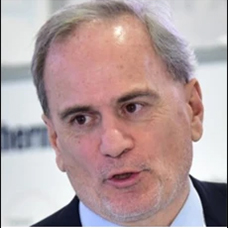
Guido Finocckì
DECO2: the new concept of embossed tissue roll
The Tripler is the three-roll embosser engineered by Giotto Technologies to redefine flexibility in tissue converting.
Unlike conventional embossing systems, the Tripler can operate with three rolls working simultaneously, enabling up to eight different embossing combinations. This unprecedented flexibility allows converters to rapidly adapt production schedules. In just 10 minutes, production can be switched through an automatic changeover system without paper breaks.
Building on the unique potential of the Tripler, Giotto Technologies presents DECO2, an embossing concept designed to create truly innovative tissue rolls.
Engineered specifically for multi-ply products, DECO2 introduces a groundbreaking structure featuring two different double-height point-to-point decorative embossing patterns on the outer plies and a separately embossed inner ply.
The result is a product that creates an immediate impact on the shelf while balancing visual elegance, mechanical strength, and consumer comfort.
SPEAKER BIO
Guido Finocchi began his career at Fabio Perini S.p.A. within the sales organization, eventually becoming Global Sales Director and later CEO of the company. He spent 20 years with Fabio Perini, including the last six years in top management positions. He subsequently joined WEPA as General Manager responsible for the Southern European market, covering France, Italy, and Spain. He later moved to APP, first in China as Technical Director of the Group and then in Indonesia as CEO responsible for six Asian countries, successfully turning a loss-making business into a positive EBITDA operation. After four years as Sales Manager at MAXIMA Tissue Solutions, a manufacturer of converting machinery for the tissue industry, he joined Giotto Technologies, where he currently serves as Chief Sales Officer (CSO). The company specializes in the production of roll and folded tissue converting lines for the mid- to high-end tissue market, with a strong focus on technological innovation and energy-saving solutions.

Jonathan Ciomei
Design innovations in industrial log saws: performance, accessibility and process stability
In industrial tissue converting, the cutting phase of professional rolls is increasingly affected by operational challenges reported by many converters, including process instability, component wear, and the growing complexity of day-to-day machine management.
In this context, Eng. Ciomei will present the main technological and design challenges involved in optimizing industrial log saws, highlighting the evolution of technical solutions that led to the development of the new LADON Evo generation.
The presentation will focus on the factors that directly affect operational performance and long-term equipment management, with an approach aimed at improving machine serviceability and introducing more sustainable solutions, also through the increasing electrification of systems.
This design evolution contributes significantly to the efficiency and operational continuity of converting lines dedicated to professional tissue products.
SPEAKER BIO
Jonathan Ciomei is Mechanical Engineering Supervisor – R&D Manager at Maflex. He is responsible for the optimization of tissue converting lines, with a constant focus on market evolution and customer requirements. With 20 years of experience in the industry, he oversees mechanical engineering, research, and development activities, contributing to improvements in machine performance, plant production stability, and finished product quality. His approach combines innovation and flexibility, with a strong focus on process automation aimed at reducing operating times, improving operator safety, and implementing increasingly electrified systems that can be adapted to different production requirements.
