Chemical innovation for efficiency, quality and sustainability in the paper industry
Friday 9 October time 10:00 - 12:40MIAC Conference Room
Chemical innovation for efficiency, quality and sustainability in the paper industry
Friday 9 October time 10:00 - 12:40MIAC Conference Room
Chemistry has become one of the main drivers of innovation in the paper industry. From product quality and energy efficiency to process stability and environmental sustainability, advanced chemical technologies are playing an increasingly important role in improving the performance of paper mills and converters.
The MIAC Chemicals Conference will provide an overview of the latest developments in chemical products, biotechnology, and process control solutions for paper, board, and tissue manufacturing. Through industrial case studies, practical applications, and technical presentations, attendees will explore topics such as evolving European regulations, carbon footprint reduction, circular economy strategies, next-generation drainage and retention systems, stickies management, advanced process monitoring, safety in tissue converting, and the use of lower-impact raw materials and formulations.
The session is designed for production managers, process engineers, quality managers, R&D specialists, chemical purchasing managers, environmental and sustainability professionals, and all technical experts interested in the latest chemical innovations for the paper industry.
Registration of participants
Massimo Ramunni
Opening remarks
The conference will be moderated by Massimo Ramunni, Deputy Director General of Assocarta and Secretary of Aticelca, who has been actively involved for many years in the leading technical and regulatory activities of the Italian and European paper industry.
MODERATOR BIO
Massimo Ramunni graduated in Industrial Chemistry from the University of Milan. After an initial professional experience in the aluminum industry, he joined Assocarta, the Italian association of the pulp and paper industry, in 1998 and became Deputy Director General in 2008. He is also Secretary General of Aticelca, the Italian association of paper industry technicians, and a member of the Board of EUCEPA, the European association of paper engineers and technicians. In addition, he serves on the Scientific and Technical Committee of the Master’s Degree in Paper and Cardboard Engineering at the University of Pisa. He participates in and chairs several industry working groups and committees at both national and European levels, focusing on environment, climate, circular economy, food contact materials, forestry, research and development, and technical standardization. He is the author of numerous publications and technical guidelines for the paper industry.

Prof. Paolo Zaninelli
Awarding of diplomas for the 31st annual paper technology course
Ilaria Malerba
Chemistry and paper: evolution of the European regulatory framework and impacts on the supply chain
The European regulatory framework governing chemicals is continuously evolving and is becoming increasingly relevant for the entire paper value chain. New European Union initiatives, closely linked to sustainability, circular economy, and product safety objectives, are reshaping requirements, responsibilities, and opportunities for industry stakeholders.
This presentation will provide an updated overview of the main regulatory and legislative developments affecting both the chemical and paper industries, with a particular focus on the initiatives expected to have a direct impact on companies operating throughout the value chain.
Special attention will be given to the implications for suppliers of paper chemicals and process auxiliaries, examining the potential effects on product development, regulatory compliance, sustainability, and industrial competitiveness. The session aims to provide a clear understanding of the challenges and opportunities that the evolving European regulatory landscape presents for the paper industry.
SPEAKER BIO
Ilaria Malerba works within the Technical and Scientific Department of Federchimica, where she is involved in product safety, chemicals regulation, and industrial hygiene. For many years, she has been engaged in monitoring the evolution of European chemicals legislation, with particular focus on the REACH and CLP Regulations, the European Chemicals Strategy for Sustainability, and the impact of new regulatory requirements on industrial value chains. She actively participates in national and European technical working groups and supports member companies in the interpretation and implementation of sector-specific regulations.

Philippe Schyns
Next-generation drainage and retention system reduces energy consumption and streamlines chemical complexity
Traditionally, papermakers have faced a trade-off between retention and drainage on one hand, and sheet quality and strength on the other. Chemical programs that promote the formation of large flocs often deliver rapid drainage but do not necessarily support higher production rates or lower energy consumption.
SpeeDrain™ is a newly developed solution designed to create a smaller and more uniform floc structure within the fiber furnish. This innovative chemistry improves sheet formation, enhances press section efficiency, and contributes to lower overall energy demand.
Industrial applications on kraftliner and recycled board machines have demonstrated improved retention performance, reduced COD loads, and lower energy consumption, while enabling a simplified retention program.
This presentation will provide an overview of the new chemistry and its development, examining its impact on sheet structure and comparing its performance with traditional retention and drainage programs. It will also illustrate the operational and economic benefits delivered to papermakers, supported by industrial case studies highlighting technical results and documented value creation.
SPEAKER BIO
Philippe Schyns is a Senior Industry Technical Consultant at Nalco Water, an Ecolab company, with more than 30 years of international experience in the paper industry. He combines a strong academic background, including a PhD from Wageningen University and research experience at MIT (USA), with extensive hands-on expertise in process optimization, water management, and strength programs. Philippe supports customers across Europe in improving machine efficiency, product quality, and sustainability, with a focus on delivering integrated, end-to-end solutions for the paper manufacturing process.

Silvia Giorgi
Flow cytometry for qualitative analysis of the papermaking process
Flow cytometry is an advanced analytical technique for the detection and real-time monitoring of hydrophobic particles throughout the entire papermaking system. It enables the rapid measurement of particle count, size, and hydrophobicity without the need for complex sample preparation.
In modern papermaking operations, it has increasingly replaced traditional testing methods by enabling proactive control of synthetic stickies and natural pitch, which are among the main causes of deposits, machine downtime, and quality defects. Particles are labelled with a fluorescent dye, pass individually through an analysis channel, and are detected by a laser system that provides information on their number, size, and degree of hydrophobicity.
This technology makes it possible to identify and isolate the most critical particles, particularly those smaller than 100 µm, allowing mills to define the most effective strategy for problem resolution.
A case study will illustrate the transition from powdered talc to advanced liquid technologies. Through detailed analysis and scheduled monitoring, liquid solutions have provided more stable particle control, reducing deposits and improving system cleanliness, paper quality, and production continuity.
Flow cytometry therefore represents an important link between research and development activities and industrial papermaking operations, enabling the validation of next-generation treatment technologies under real operating conditions.
SPEAKER BIO
Silvia Giorgi is a chemist with a background in industrial research and analytical laboratory management. She has gained more than ten years of experience in Good Laboratory Practice (GLP) activities and new product development. She currently works in the Research and Development department of NCR Biochemical, contributing to the development of innovative solutions for the paper industry.

Linda Micheel
Exploring new chemical and biotechnological approaches for tissue production
Evonik promotes sustainability in the tissue and paper industry through innovative solutions and close collaboration with paper mills and tissue converters. Its portfolio includes emulsifiers, wetting agents, defoamers, softeners, debonders, and lotions specifically developed for the tissue, pulp, and paper sectors. By working closely with industry leaders, Evonik develops sustainable, high-performance solutions that meet both production requirements and environmental standards.
A key innovation is Evonik’s liquid esterquat technology, designed for easy handling in both spray-on and wet-end applications. It delivers performance comparable to traditional imidazolinium quat technologies while offering more than 60% biobased content and improved opportunities for environmental labeling.
The presentation will also introduce rhamnolipids, fully biobased biosurfactants produced through the fermentation of renewable sugars. These innovative products support enzymatic processes such as deinking, are readily biodegradable, gentle on fibers and enzymes, and provide excellent surface tension reduction.
Together, these developments demonstrate how advanced chemistry and biotechnology can contribute to more sustainable tissue production while maintaining high levels of performance and product quality.
SPEAKER BIO
Linda Micheel is a chemical engineer with an MBA and brings six years of experience in biotechnological research, including work on fermentation process development for biosurfactants, followed by three years in technical service focused on fiber applications. Throughout her career, she has worked closely with customers and industry partners to develop innovative and sustainable solutions for the pulp and paper industry. Her expertise lies in translating scientific advancements into practical applications that address real-world industrial challenges.
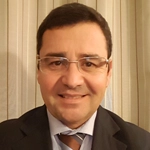
José Domingos Fernandes
Ackumen™ ECHOWISE® PRO – advanced process control with sonar-based technology
Achieve superior process control with Ackumen™ ECHOWISE® PRO, the innovative non-invasive technology developed by Buckman. Process variability has a direct impact on operating costs and prevents mills from achieving optimal performance. ECHOWISE® PRO enables operators to take control of process variability rather than being affected by the inefficiencies it creates.
By providing real-time insight into process conditions, ECHOWISE® PRO supports Buckman’s specialists in developing advanced control strategies that enhance operational performance across a wide range of applications.
In papermaking operations, the technology can help increase machine efficiency, optimize raw material and specialty chemical consumption, and improve final sheet quality. In pulp production, it can contribute to higher production rates, lower bleaching costs, reduced steam consumption in recovery operations, and lower caustic soda make-up requirements.
Accurate, real-time measurement of entrained air allows a much deeper understanding of its impact on the process. Based on this information, Buckman develops dedicated control algorithms capable of reducing variability and driving process performance to higher levels of efficiency and stability.
SPEAKER BIO
José Domingos Fernandes has 34 years of dedicated experience in the tissue industry, combining strong technical expertise with extensive commercial knowledge. He spent more than 14 years working directly in tissue paper manufacturing, gaining valuable hands-on operational experience. Building on this technical background, he has spent the last 20 years in the specialty chemicals sector, supporting tissue producers in improving product performance, enhancing operational efficiency, and implementing innovative chemical solutions specifically tailored to tissue applications.
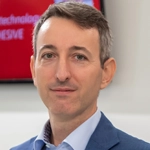
Andrea Azzola
Henkel in-house LAM PVOH product: CO₂ savings with a new lamination adhesive
Approaching sustainability from a unique perspective across the entire value chain requires manufacturers to look beyond traditional production processes and adopt solutions that help reduce environmental impact throughout the industry, with the ultimate goal of lowering the overall carbon footprint.
Through the joint efforts of leading scientists across different business areas, Henkel has developed a solution capable of delivering significant product carbon footprint savings, with a reduction of up to 32% in CO₂ emissions. Following a circular economy approach, Henkel repurposes by-products generated within its own manufacturing processes, giving these materials a second life through a new generation of tissue and towel lamination adhesives.
The formulation is designed to achieve a carbon footprint reduction of 30–40%, helping customers meet Science Based Targets initiative (SBTi) commitments and broader carbon reduction goals. At the same time, it delivers sustainability benefits without compromising quality, safety standards, or product performance, thanks to the use of chemically virgin raw materials where required.
Henkel continues to expand its portfolio of lower-emission adhesives and combines these solutions with additional performance enhancements, including improved machine cleanliness and running efficiency.
This new lamination solution introduces the principles of circularity into tissue manufacturing and establishes a benchmark for a more sustainable and less waste-intensive use of chemicals within the industry. It represents another important milestone on Henkel’s journey toward net-zero emissions.
SPEAKER BIO
Andrea Azzola is Head of Product Development for water-based adhesives, with a strong focus on tissue and towel applications. He has extensive expertise in the development and industrialization of innovative and sustainable solutions for industries such as tissue converting and labeling. Andrea leads cross-functional initiatives within Henkel aimed at optimizing product performance, operational efficiency, and raw material strategies, supporting the development of next-generation tissue products and other advanced adhesive applications.

Thomas Brandenburger
Water-based lubrication solutions for safe tissue converting
The converting section of a tissue mill represents a particularly safety-critical operating environment, where high machine speeds and friction-intensive processes coexist with large quantities of combustible paper dust. When mineral oil-based lubricants and process aids are used, this inherent risk is significantly increased. Their flammability, tendency to form aerosols, and accumulation together with paper dust raise the overall fire load and can make even minor ignition sources potentially critical.
At the same time, dependence on mineral oil-based products is becoming increasingly challenging due to regulatory pressure, sustainability requirements, geopolitical uncertainty, and the volatility of fossil-based supply chains, all of which raise long-term concerns regarding availability and cost stability.
Against this backdrop, water-based embossing formulations and log saw lubrication systems provide a robust and forward-looking alternative. By eliminating flammable oil-based components, they reduce contamination, improve process stability, and significantly lower fire and ignition risks while maintaining reliable performance and consistent product quality.
Their adoption also supports sustainability objectives by reducing VOC emissions and decreasing dependence on fossil-derived raw materials. Overall, water-based converting chemistries offer a comprehensive strategy for improving safety, operational reliability, and long-term resilience in tissue converting operations.
SPEAKER BIO
Thomas Brandenburger is a paper chemicals specialist with nearly 30 years of experience in the paper industry. He studied Chemical Engineering and joined Petrofer in 1996, beginning his career in the company’s laboratory. Driven by strong curiosity and a customer-oriented mindset, he soon moved from research and development into customer-facing roles. Since 2005, he has been working in technical sales and, shortly thereafter, assumed the position of Team Leader Technical Sales. In his current role, he combines extensive technical expertise with practical application knowledge, supporting customers in the development and implementation of innovative chemical solutions for the paper industry.
